Orlune: Women's Entrepreneur Network App

How Shape Turned a No-Code Prototype Into a Production-Ready Platform for Orlune

Hatty didn't set out to become a software founder. She was made redundant twice before she started her own business, OOCO, teaching other founders how to set up their email marketing automations and CRM systems. Somewhere in that work she kept running into the same gap: there was nowhere for women in business to actually learn and build relationships that led somewhere. So she built it herself. That's how Orlune started.

Like a lot of founders in 2024, Hatty didn't begin with a team of engineers. She used Base44 to get Orlune off the ground fast, a no-code platform that let her turn an idea into something people could actually use. Within months, the prototype had grown into a genuinely full-featured community app: member profiles, a social feed, an expert marketplace, paid events, direct messaging, peer matching, an academy of training videos, a book club, a partner toolkit, and three membership tiers.

That's an impressive amount of product for one founder to ship without a dev team. It's also, as Hatty found out, exactly the kind of foundation that starts to crack under real usage.

The problem with vibe-coded success

No-code and AI-assisted tools are brilliant for proving an idea works. They're not built for the moment your idea starts working too well. As Orlune's member base grew, the gaps that don't matter at ten users start mattering at a thousand: payment flows that were never stress-tested, admin tools stitched together for a single person to use, security and data handling that hadn't been built with compliance in mind, and a codebase nobody but the original no-code platform could really maintain or extend.

Hatty described handing it over as leaving Shape with her "broken AI generated code, a broken heart and one hell of a vision." That's the honest version of a story a lot of founders live through quietly: you build something real, people start using it, and then you realise the thing holding it together wasn't built to hold that much weight.

AI Assisted Development
Fast and stable following good practices
Vibe Coding
Fast and looks impressive but not stable at scale

What Shape actually did

Shape didn't start by throwing out Orlune's prototype and starting from a blank page. The first step was a proper technical assessment of the existing Base44 build: what was solid, what was fragile, what could be carried forward, and what needed to be re-architected from the ground up.

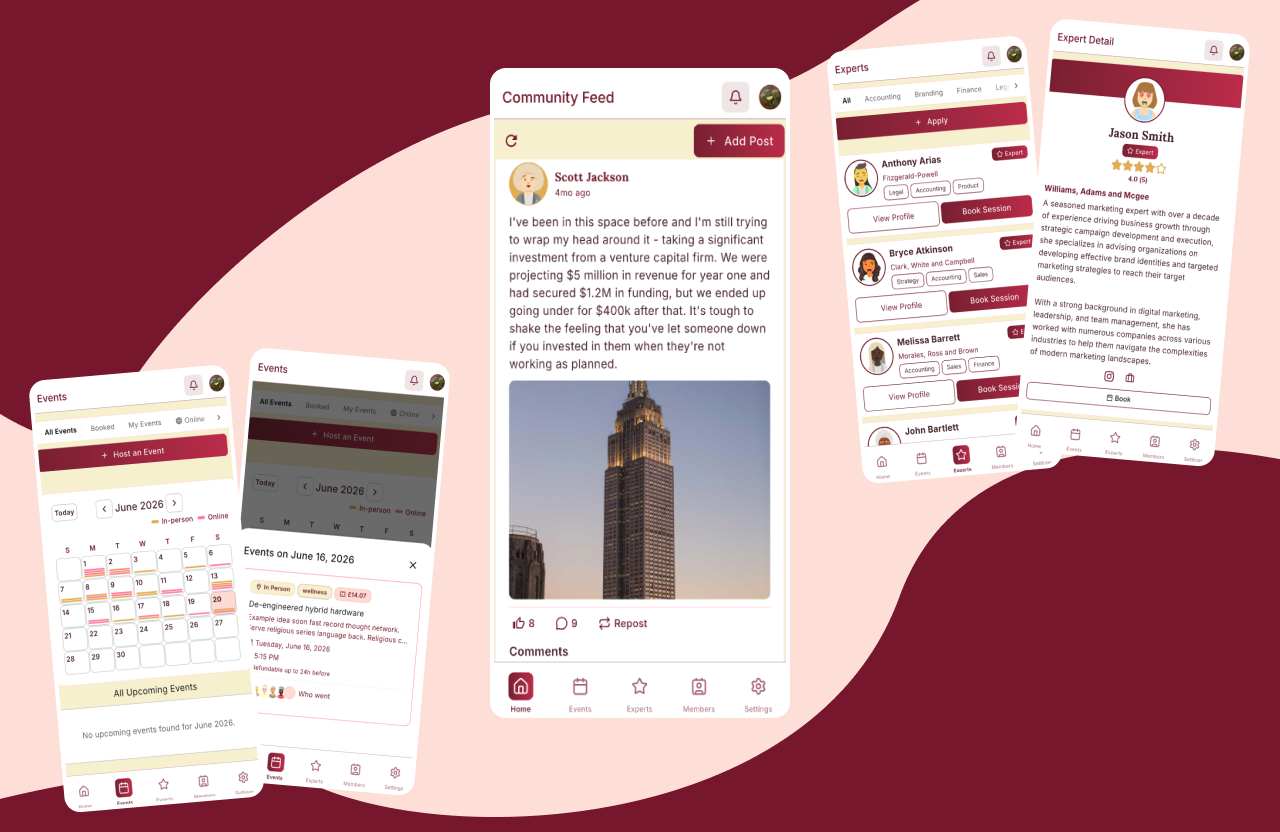
From there, the team rebuilt Orlune's core as a native Flutter app running on a custom backend, instead of a no-code platform stretched past its limits. Rather than trying to rebuild every feature from the original prototype in one go, Shape focused on getting the core loop right first: authentication and member profiles, the member directory, the social feed, the expert marketplace, events, notifications, and admin tools. These are the features Orlune's community actually lives in day to day, and they needed to work flawlessly before anything else got layered on top.

Organisers can handle revenue, refunds, and payouts properly instead of manually. Expert ratings and reviews were rebuilt to production standard. Account deletion and legal compliance were built in properly rather than bolted on. And Orlune now exists as a native mobile app on iOS as well as the web, something the original prototype never had.

Put simply, the community can now create a profile and find the right people through a proper member directory, post and scroll a social feed that holds up under daily use, book and pay for events with a QR code at the door, and find and rate experts through a marketplace built to be trusted rather than just tolerated.

What got left behind

Direct messaging, co-founder matching, the Academy video library, Book Club, the partner toolkit, membership tiers, member-following, and expert story circles all existed in the Base44 prototype. None of them are in the current production app yet. A prototype can afford to ship a dozen half-finished features because nobody's depending on them yet. Production software can't. Shape's job wasn't to replicate everything Orlune's founder had imagined, it was to make sure the features people actually rely on today are fast and built to scale, and to leave a clear and prioritised roadmap for everything else.

Informing you what to fix first is the real value of a properly done technical assessment before the rebuild starts.

How Shape Turned a No-Code Prototype Into a Production-Ready Platform for Orlune

Like a lot of founders in 2024, Hatty didn't begin with a team of engineers. She used Base44 to get Orlune off the ground fast, a no-code platform that let her turn an idea into something people could actually use. Within months, the prototype had grown into a genuinely full-featured community app: member profiles, a social feed, an expert marketplace, paid events, direct messaging, peer matching, an academy of training videos, a book club, a partner toolkit, and three membership tiers.

No items found.

Why this matters beyond Orlune

This is the usual story for founders building with AI tools and no-code platforms right now. Get something working fast, find your first real users, and then hit a wall where the tool that got you started can't take you any further. The businesses that get stuck are the ones who either rebuild too early, wasting effort on features nobody's using yet, or too late, after outages and security issues have already cost them trust.

When a founder has proven the idea works and now needs software that can carry the weight of real customers and real growth, Shape's ScaleUp Build service turns a vibe-coded prototype into production-ready software.

If your app started life as a prototype and is now carrying more weight than it was ever designed for, that's usually the sign it's time for the same conversation Hatty had with Shape. A code assessment is the place to start: senior engineers are looking at what you've actually got and telling you honestly what needs to change before your next stage of growth breaks it.

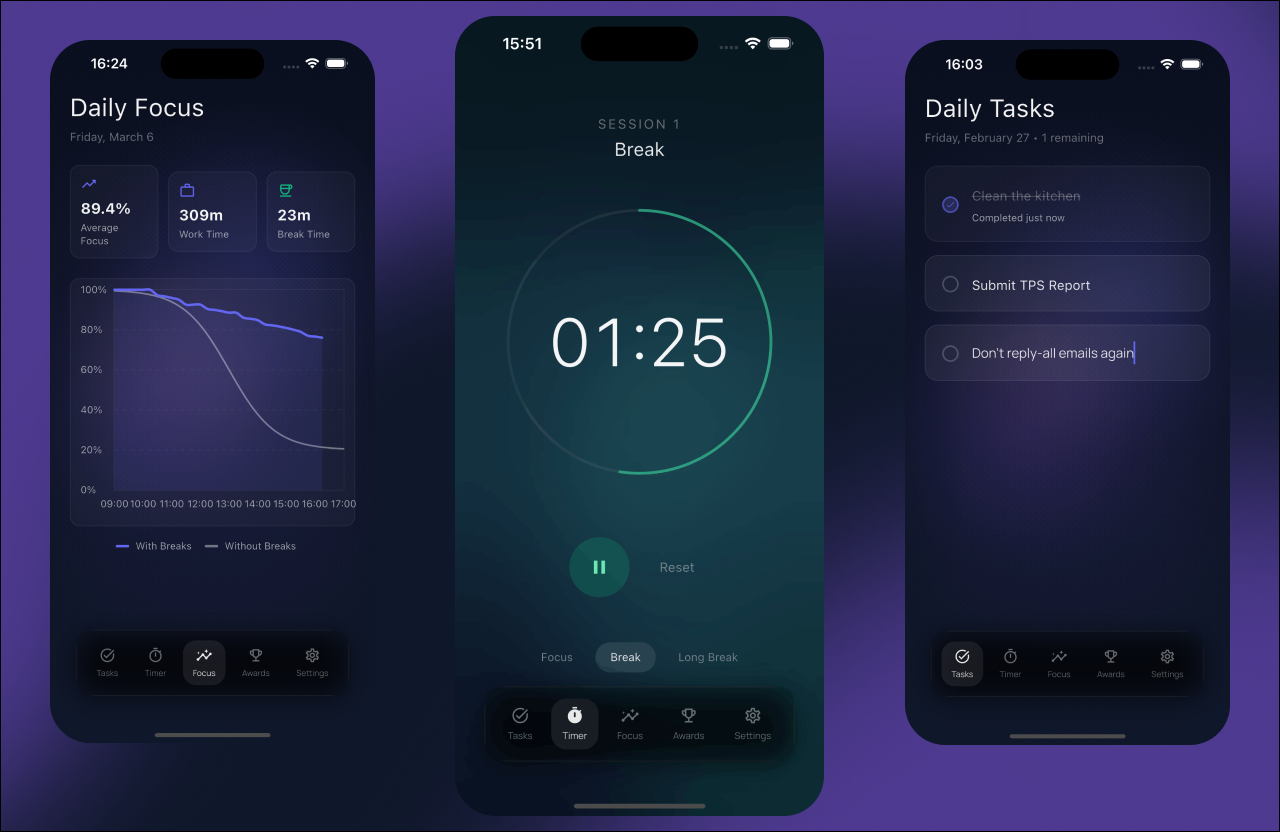
If you'd rather see what we build from a blank page than a rebuild, our FocusRise case study shows how we took a productivity app from idea to the App Store in four weeks flat.

Ready to find out where your own product stands? Book a ScaleUp code assessment - no obligation, no hard sell, just an honest read on what needs to change before your next stage of growth breaks it.

We are serious about your business.

The entire process, from Shape reaching out, to me leaving them with my broken AI generated code, a broken heart and one hell of a vision has been both comforting and exciting.

-
Hatty